
Neurodivergence, Photography and Kids!
I have taught photography for fourteen years. In that time I have watched a particular thing happen often enough that it stopped being a coincidence.
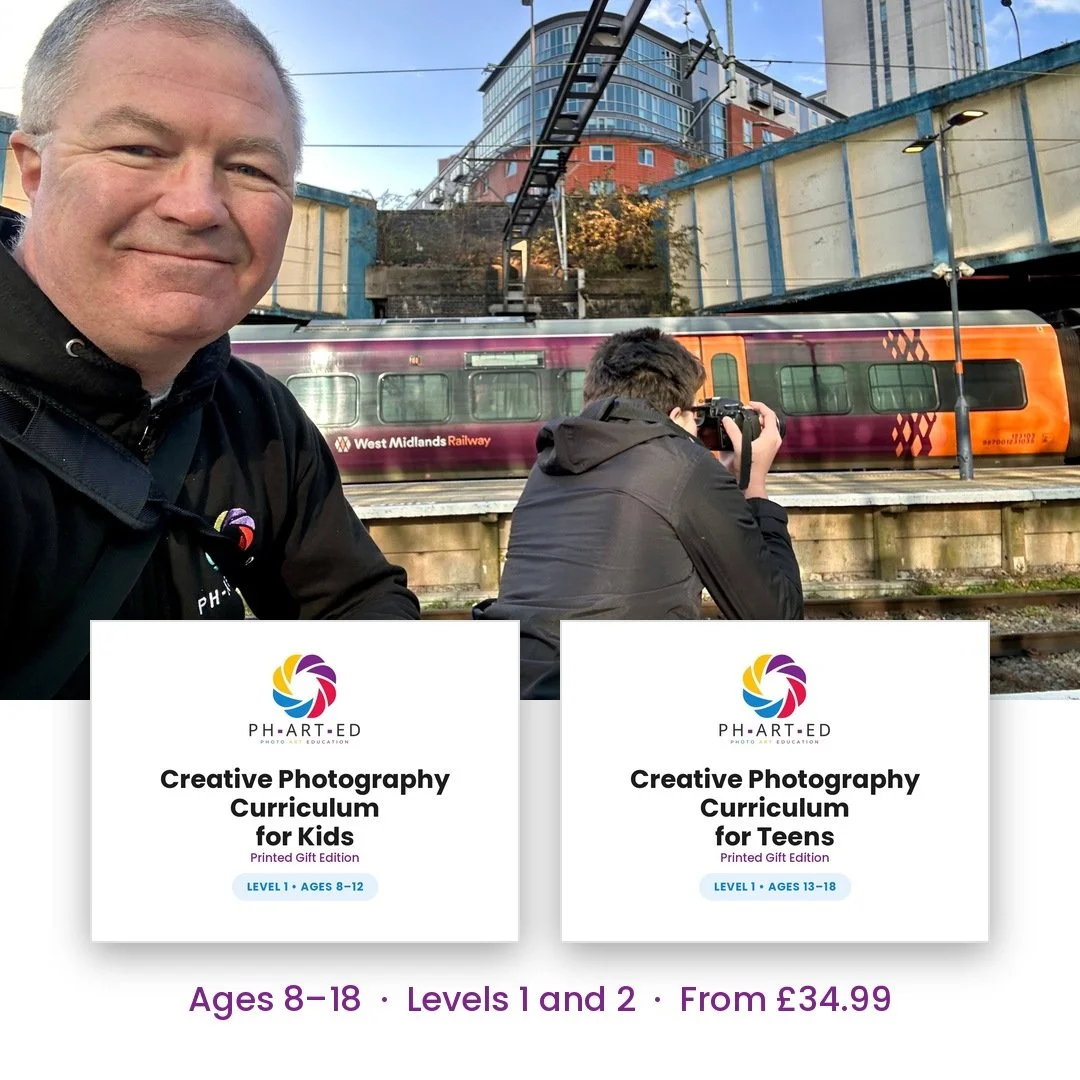
A child who struggles to sit through a lesson will spend forty minutes working out how to photograph a train. A teenager who finds conversation exhausting will talk for an hour about why one frame works and another one fails. A parent standing beside me says some version of the same sentence: I have never seen them concentrate like that.
Photography suits a lot of neurodivergent children. Here is why.
It rewards noticing
Marky, student for 18 months in person.
Most school subjects reward recall. Photography rewards attention to things other people walk past. The particular colour of a wall at four in the afternoon. The way a shadow cuts a pavement in half. The gap between two buildings that frames something worth seeing.
A child who notices everything is often told they are distracted. Hand them a camera and the same quality becomes the whole point. That reframing matters more than any technique I could teach them.
The rules make sense
Aperture controls depth. Shutter speed controls motion. ISO controls sensitivity. Change one and something specific and predictable happens.
There is no social ambiguity in it, no reading between lines, no unwritten expectation. For a child who finds the unwritten rules of a classroom exhausting, a system that behaves the same way every time is a relief rather than a burden.
It finishes

A painting takes weeks. A model takes a weekend. A photograph takes the time it takes to press a button, and then it exists.
For a child who has started a hundred things and finished eleven of them, that speed is everything. They make something. They can look at it. They can show someone. The loop closes in seconds, and closing the loop is what builds the appetite to go round again.
It belongs to them
A photograph a child makes is theirs in a way that completed worksheets are not. Nobody set it. Nobody marked it. They chose the subject, the moment and the frame, and the result carries their decisions in it.
Children who spend much of their week doing what a timetable tells them tend to recognise that difference immediately.
Where the teaching usually goes wrong
PH-ART-ED Photo • Art • Education
So photography is a good fit. The problem is almost never the subject. It is how it gets taught.
Open most photography books for children and you find dense pages, busy layouts, three ideas competing on a spread, and instructions that assume a reader will work out the missing steps on their own. Then a chapter ends and the next one starts somewhere unexpected, with a different structure and a different shape on the page.
For a child who works better knowing what comes next, that is the whole difficulty in one object. The photography is accessible. The book is the obstacle.
What works instead
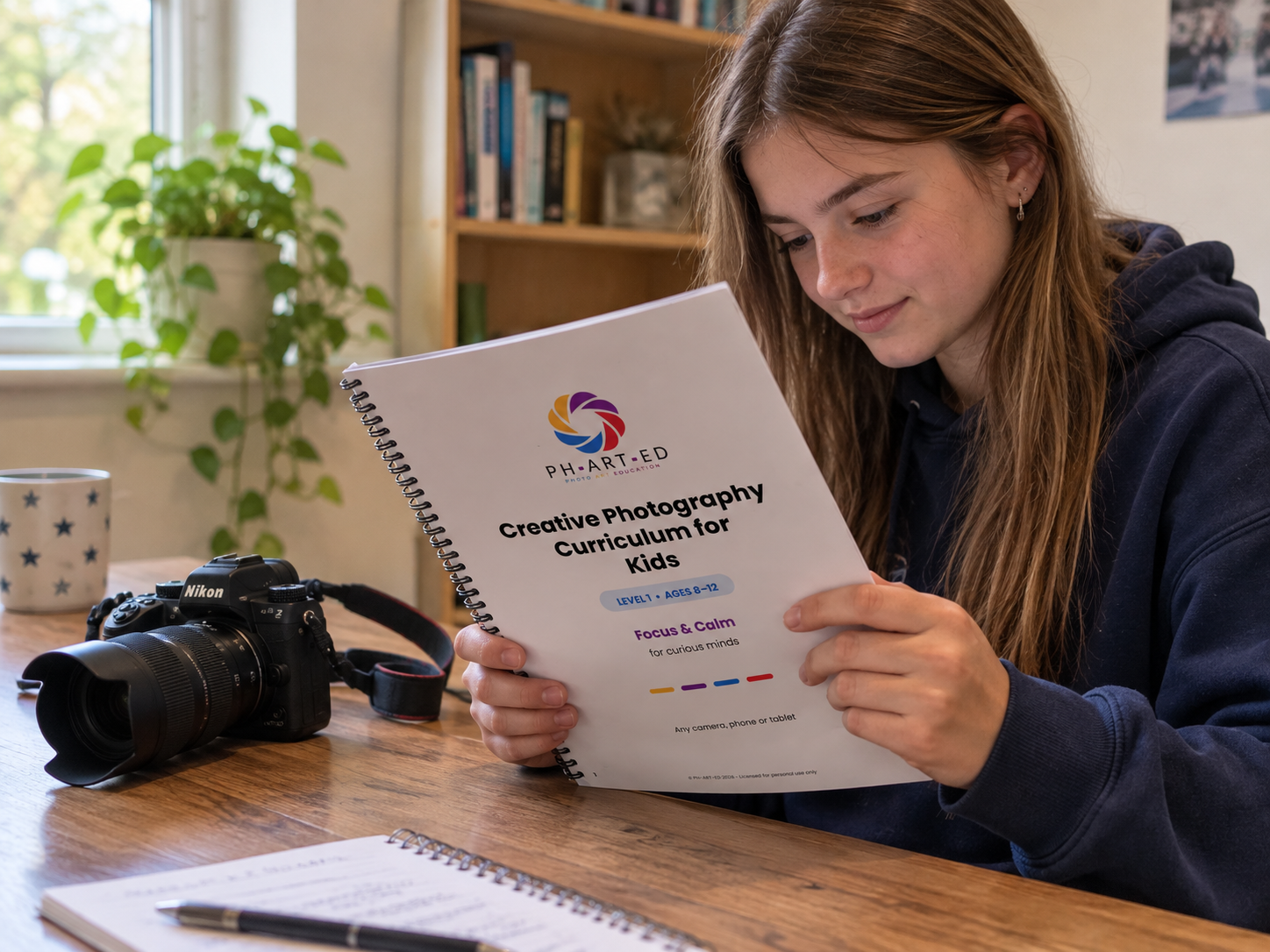
Opening page for the Kids Curriculum level 1
Four things, learned from teaching in person and then built into everything I write.
One idea on a page. Not two with one in a box at the side. One, with space around it.
The same structure every time. If every module runs the same six pages in the same order with the same headings, then after the first one a child knows the shape of every module that follows. The surprise is gone and what is left is the photography.
Every step written out. The step a teacher skips because it seems obvious is frequently the step that stops a child dead.
Choice inside a boundary. Three ways to try something gives real agency while keeping the decision small enough to actually make. An open brief gives agency and paralysis in the same breath.
Something to try this week
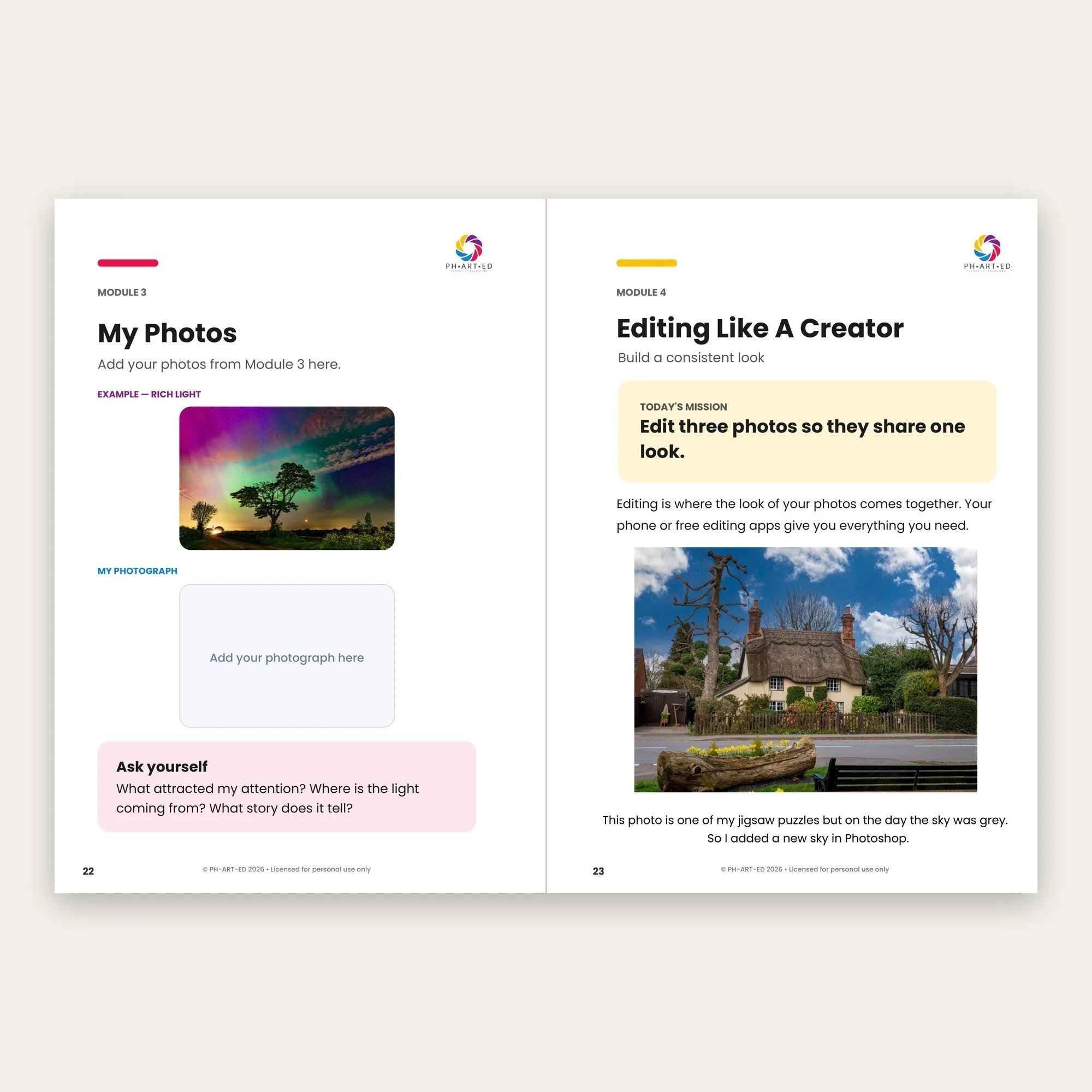
Example from Teens level 1 book
Here is a starting exercise that needs no equipment beyond whatever camera or phone is already in the house.
Pick one colour. Red works well. Spend twenty minutes on a walk making photographs of anything red. A post box, a car, a crisp packet, a front door.
That is the whole brief. No settings to learn, nothing to get right or wrong. What it does is switch on the noticing, and that is the skill everything else is built on. Most children come back with twenty frames and a running commentary about the ones they rejected, which is the part that matters.
Try it, then ask which one they like best and why. Their answer will tell you a great deal about what they see.
Where to go next
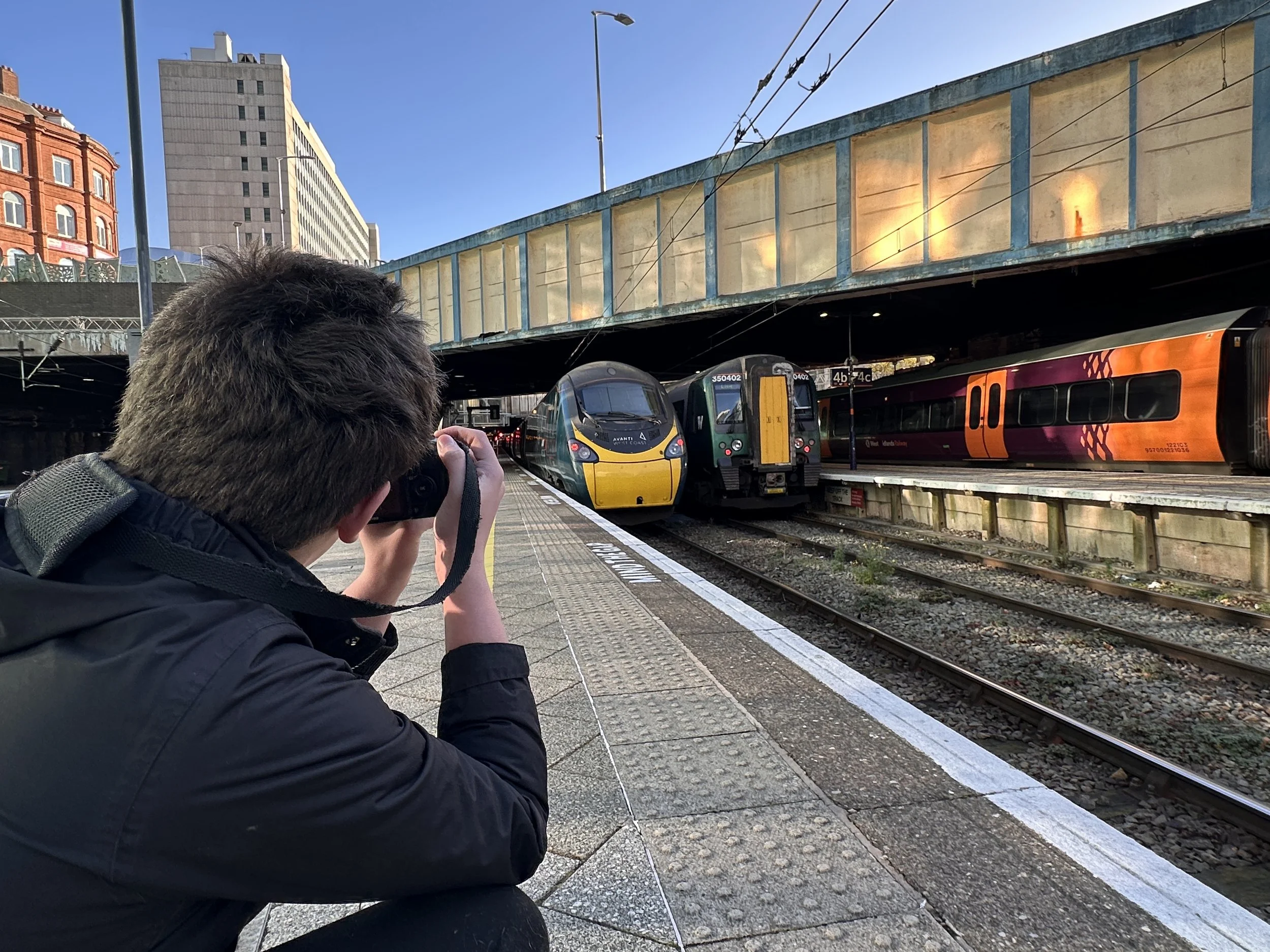
Logan on his first in person workshop with me at Birmingham New Street Station
I have written the PH-ART-ED curriculum around everything above. Printed A4 workbooks, Wire-O bound so they open flat and stay open, with one idea on each page, the same six pages in every module, and a My Photos page for the child's own printed photographs.
Kids covers ages 8 to 12. Teens covers 13 to 18. Both come in Level 1 and Level 2.
Have a look at the printed books for neurodivergent kids and teens, or read more about how the course is built.
Paul Hands
PH-ART-ED, Photo • Art • Education